


Scotland’s 2026 World Cup campaign wasn’t so much a failure as it was a vanishing act. No noise. No fight. No identity. Just a slow, familiar fade into irrelevance while the rest of the footballing world got on with the business of actually competing.
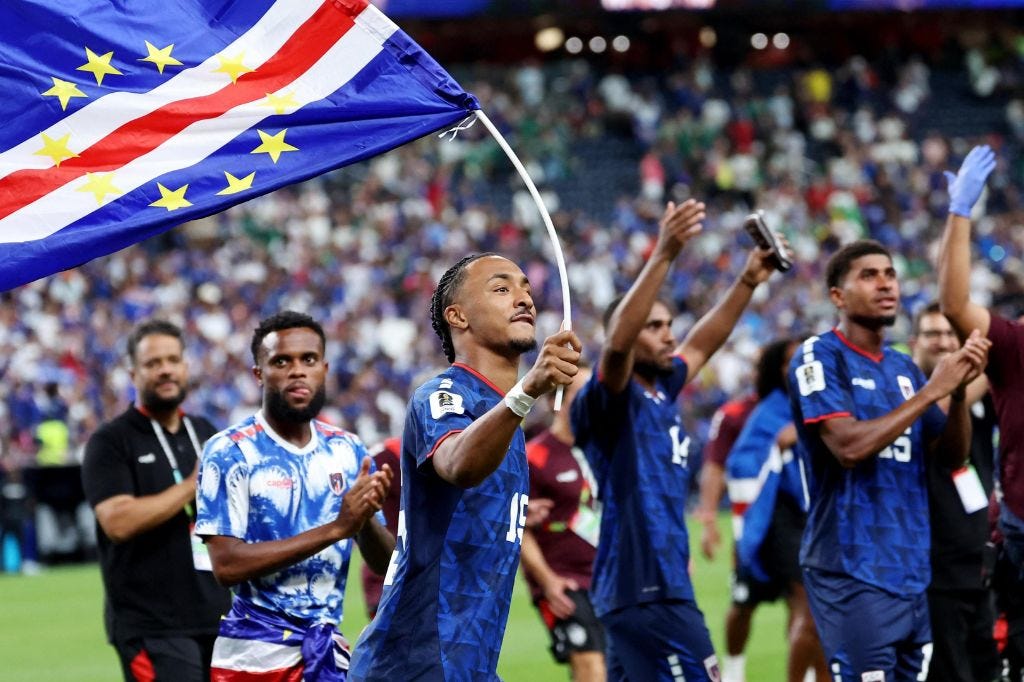
And if you want a painful, unavoidable comparison, you don’t need to look far. Cape Verde, a nation with a population smaller than Glasgow, didn’t just qualify for their first-ever World Cup. They arrived. They played. They left with their heads held high.
Scotland, meanwhile, slunk away like a team that was already beaten before a ball was kicked. That contrast should shame everyone involved from Steve Clarke, to the Scottish FA, to the wider culture that continues to reward caution over courage.
Because this wasn’t bad luck. This wasn’t a tough group. This was mentality. This was design. This was Scotland choosing fear. Clarke’s Scotland of Safe, Slow, Spineless.
Let’s stop pretending this is about tactics in isolation. It’s not about whether you play a back five or a back four. It’s about what those choices say about your intent. And Steve Clarke’s intent had been painfully clear for years - don’t lose. That might get you through the qualifiers. It might earn you plaudits for organisation and discipline. But at a World Cup? It gets you nowhere.
Scotland didn’t go out swinging. They didn’t go out taking risks. They didn’t even go out trying to impose themselves on games. They went out trying to manage them. Managing the clock. Managing territory. Managing expectations. Managing, above all else, fear.
There was no bravery in possession. No urgency in transition. No sense that Scotland believed they belonged on that stage. Every decision felt reactive, cautious, second-guessing. It’s the footballing equivalent of turning up to a fight hoping the other guy doesn’t throw a punch. And when you play like that, you don’t just risk losing, you guarantee irrelevance.
Now look at Cape Verde. A nation making their debut at the World Cup. No history at this level. No expectation. No safety net. And yet they managed something Scotland didn’t do, they played without fear.
A 0-0 draw with Spain. Not by parking the bus and praying, but by competing. By believing they had a right to be on the pitch. A 2-2 draw with Uruguay. Again, not survival football, actual ambition. Another clean sheet against Saudi Arabia to secure qualification to the last 32 - something that Scotland has never achieved in its history.
That alone would have been a fairytale. But they didn’t stop there. They took the reigning world champions, Lionel Messi and all, to extra time. They pushed them. They stretched them. They made them work for every inch. And when they finally went down 3-2, they walked off having gained something Scotland have spent decades chasing - respect. Not sympathy. Not “plucky underdog” nonsense. No glorious failure tags. Genuine respect. Because they showed up.
They didn’t hide behind structure. They didn’t shrink within themselves. They didn’t treat qualifying for the World Cup as the goal. They treated it like an opportunity. Scotland treated it like a risk.
But this is bigger than Steve Clarke, even if he embodied it during his 7 years in charge. There’s a deeply ingrained caution in Scottish football, a fear of being embarrassed that outweighs any desire to be great. It shows up in team selection. In substitutions. In in-game management. In the language used by pundits and Scottish FA alike.
Stay in the game. Be hard to beat. Keep it tight. All of it sounds sensible. All of it sounds pragmatic. All of it is ultimately limiting. Because at elite level, survival isn’t success. Participation isn’t progress. And Scotland have become far too comfortable confusing the two.
The Scottish FA deserve just as much scrutiny here. For years, they’ve backed a model that prioritises stability over evolution. A system that values control over creativity. A structure that rewards managers who minimise risk rather than maximise potential. There’s no bold vision. No sense of identity beyond organised and difficult. And in 2026, that’s simply not enough.
The global game has moved on. Teams like Cape Verde aren’t waiting for permission to compete, they’re taking it. Scotland are still asking.
At some point, we have to call this what it is. A bottle merchant mentality. Not in the cheap, shouty sense, but in the consistent, systemic refusal to take the kind of risks that define successful teams. Because this isn’t one bad tournament. This is a pattern.
Moments where Scotland could push on and don’t. Games where they could take initiative and won’t. Situations where they could show belief and retreat instead. And that mentality starts at the top.
The Scottish FA’s leadership has cultivated an environment where caution is safe, and ambition is dangerous. Where avoiding criticism matters more than chasing excellence. Steve Clarke didn’t invent that culture. He just helped to reinforce it.
Every conservative setup. Every negative substitution. Every post-match justification about “fine margins” and “staying in games” feeds into the same narrative - We’re just happy to be here.
Cape Verde weren’t happy to be there. They wanted more. That’s the difference. Scotland should be embarrassed. Not because Scotland lost and failed to qualify for the knockout stages, but because of how they approached the opportunity. There should have been hard questions asked of Clarke’s management - but he jumped ship before he was questioned and ultimately held accountable.
There should be scrutiny of the SFA’s long-term direction. Of whether they actually have one. And there should be a serious conversation about identity. What does Scotland want to be? A team that occasionally qualifies and quietly exits? Or a team that actually competes when it gets there?
Because right now, the answer is painfully clear. And it’s not good enough.
Here’s the reality for the Tartan Army, you cannot play fear-based football on the biggest stage and expect anything other than failure. You cannot build a system around avoiding mistakes and expect to create moments. You cannot preach belief while setting up like you don’t belong. Cape Verde didn’t have better players than Scotland. They don’t have players in the top five leagues in the world unlike Scotland.
Yet they had a better mindset and in modern football, that counts for everything. Until Scotland understand that, truly understands it, this cycle will rinse and repeat. Qualification will be celebrated. The tournament will arrive and Scotland will disappear.
Again. And again. And again. That’s not bad luck. That’s a choice.
I couldn't agree more!! Cape Verde destroyed every argument put by the Scottish Footballing establishment. They played to win! Scotland play not to lose.
I fear your words will be like lost in the wind... Fearing humiliation, it almost as if they're content with it, as you said.