


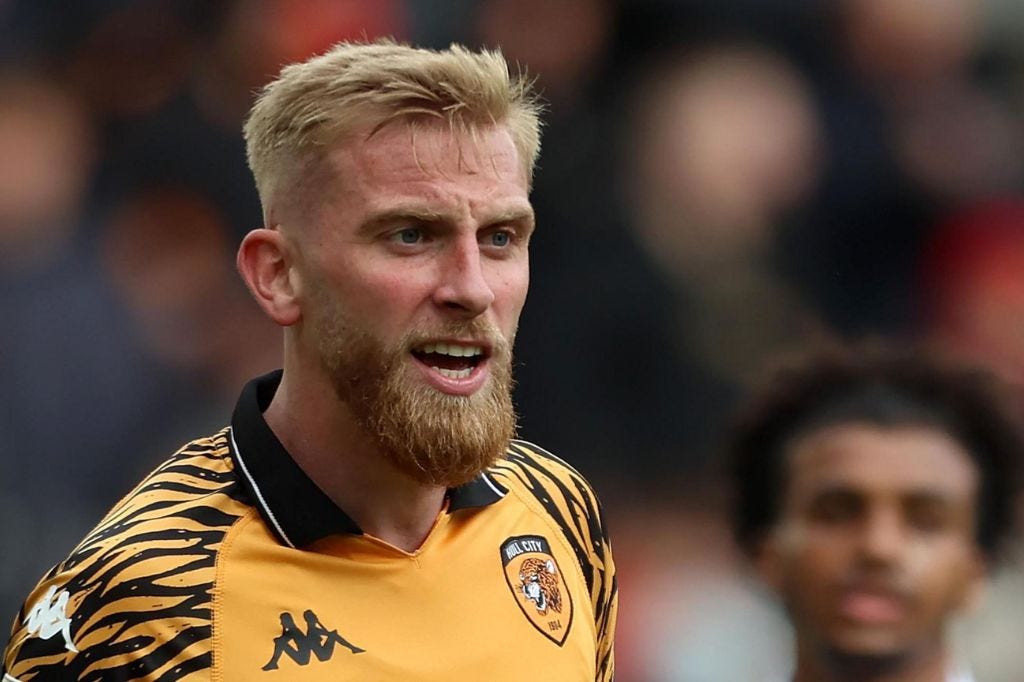
Oli McBurnie has become one of those Scotland selection arguments that tells you as much about the manager as it does about the player. On form, on confidence, and on the evidence of a season that has included a Wembley-winning moment for Hull City which saw them promoted to the English Premier League, his omission from Steve Clarke’s World Cup squad feels like a huge call, and one that will be debated for as long as Scotland remain in the tournament.
That is not saying it is the wrong call. Clarke has built his Scotland side around trust, familiarity and tactical reliability, and the five strikers he has chosen in Ché Adams, Lyndon Dykes, George Hirst, Lawrence Shankland and Ross Stewart, offer a clear idea of the profile he wants up front. Clarke is a manager who values roles, not just reputations, and he has never been shy about leaving out a name if he believes the overall balance of the squad is better without it.
Still, McBurnie’s case is hard to dismiss. He has done the one thing strikers are paid to do - score goals and deliver decisive moments, and his season for Hull has given him a strong argument that he should be in any conversation about Scotland’s best attacking options with 19 goals in all competitions. When a player is producing at that level, especially in a season where Scotland are searching for attacking threats at the World Cup, it is natural to ask whether the manager has become too attached to a preferred group of forwards.
The counterargument is just as strong. International football is not simply a reward for club form; it is about how a player fits into a specific system, how quickly he can be trusted in pressure situations, and whether he gives the squad something different from what is already there. Clarke’s selections suggest he sees Adams, Dykes, Hirst, Shankland and Stewart as a more rounded unit for the tournament.
What makes the omission sting is that McBurnie is not some fringe name drifting in and out of the picture. He is a proven, experienced forward with the kind of physical presence Scotland can struggle to replace when the game becomes direct or scrappy. He also brings a different kind of threat - a striker who can unsettle defenders, occupy centre-backs and turn half-chances into something dangerous. In a World Cup, those qualities matter more than people sometimes admit.
But there is a deeper truth here too, squads are often judged by what they leave behind as much as by what they include. If Clarke’s chosen strikers deliver the goods, the McBurnie debate will fade quickly. If Scotland struggle for goals, or if injuries expose a lack of depth, then leaving out a forward in form will look increasingly like a gamble that did not need to be taken.
So is it a mistake? Probably not a glaring one. But it is certainly a selection that carries risk, and risk is always easier to defend before the tournament begins than after the first missed chance. Clarke has backed his judgment, as managers do. McBurnie would have every right to feel hard done by, as strikers in form often do. And Scotland supporters have every right to wonder whether, in chasing familiarity, their manager may have overlooked the man with the hottest hand.
What is your take on McBurnie’s exclusion? Should he have been called up to the World Cup squad?