


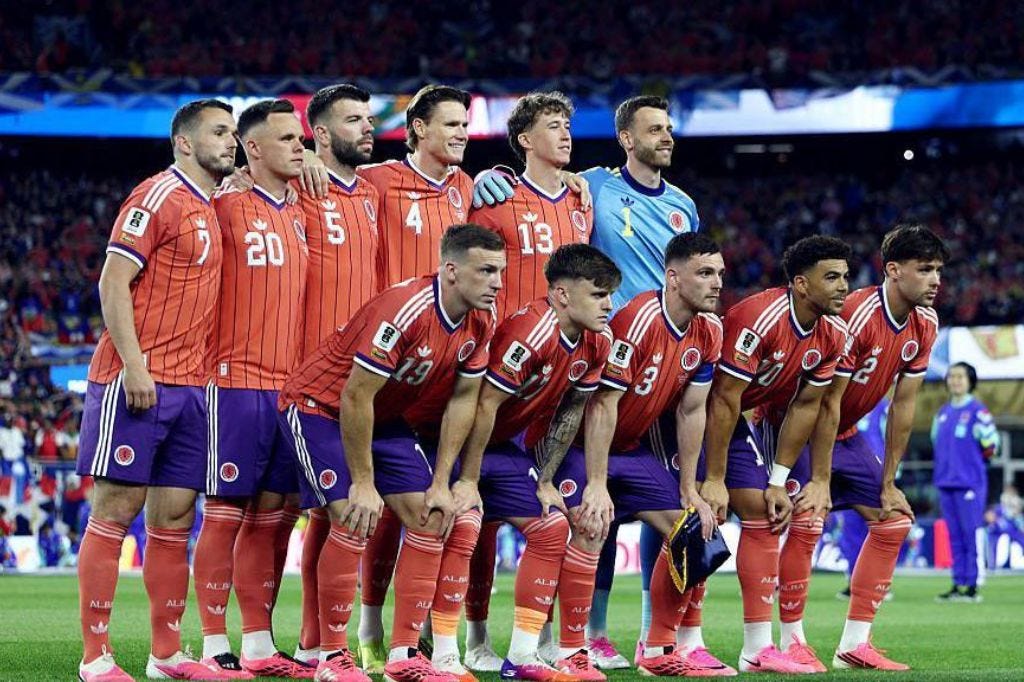
Sébastien Pocognoli has inherited a Scotland team at a crossroads. The Belgian has signed a two-year deal after being appointed Steve Clarke’s successor and now faces the immediate task of preparing the side for a Nations League campaign that begins away to Slovenia on 26 September. His appointment follows a disappointing World Cup group-stage exit, but it also presents an opportunity to change the team’s direction.
Pocognoli is not expected to make wholesale changes simply for the sake of appearing different. For the first Nations League fixture, it would be understandable if he stayed relatively close to Clarke’s final squad while assessing the players and learning about the demands of international football in Scotland. Over the following months, however, he must refresh the group, introduce the next generation and be ruthless about players who have reached the end of their international usefulness.
The players who should go
Che Adams
Che Adams has offered Scotland physical presence and hard work, but his international output has rarely matched the responsibility placed on him. He can occupy defenders and bring others into play, yet Scotland need more consistent movement, sharper finishing and a greater threat in front of goal. With younger forwards emerging and players such as George Hirst, Tommy Conway, and Kieron Bowie available, Pocognoli should look beyond Adams rather than continuing to rely on familiarity.
Lyndon Dykes
Lyndon Dykes has been a committed servant, but his limitations are increasingly clear. His height and ability to compete for long balls can be useful, especially when Scotland are under pressure, but his first touch, mobility and finishing have too often restricted the team. A new manager should want a forward line capable of pressing, rotating positions and threatening space behind defences. Dykes’ best qualities belong to a more direct style, whereas Pocognoli should be seeking a more flexible attacking approach.
Grant Hanley
Grant Hanley’s leadership and experience deserve respect, but Scotland cannot build their next cycle around a defender whose physical reliability has become a concern. Injuries and a lack of regular rhythm have made it difficult for him to maintain the level required by international football. Pocognoli should use this moment to give younger or more mobile central defenders a chance, particularly as Scotland look to improve their ability to defend higher up the pitch.
John Souttar
John Souttar has had good moments in a Scotland shirt, but he has not established himself as an undisputed first-choice defender. Questions over fitness, consistency and his ability to cope when exposed in open space remain. If Pocognoli wants Scotland to press more aggressively and build from the back, he needs centre-backs who can defend large areas and make confident decisions under pressure. Souttar should not be guaranteed a place simply because he has been part of recent squads, and with effectively frozen out at Rangers, he shouldn’t be called up at all unless playing regularly like any other player.
Anthony Ralston
Anthony Ralston’s attitude and commitment are not and never have been in question, but Scotland need greater quality and adaptability at right-back. His defensive positioning can be exposed against fast or technically gifted opponents, while his contribution in possession is not always enough to compensate. With Aaron Hickey returning to full fitness, Max Johnston developing and other options available, Ralston should no longer be treated as a player to call up - even as a back-up.
Kenny McLean
Kenny McLean has provided professionalism, versatility and experience, but Scotland should now move away from using dependable squad players as a substitute for development. He has often been asked to fill different roles without ever becoming central to the team’s identity. Lewis Ferguson, Billy Gilmour, Andy Irving, Lennon Miller and other midfielders offer a chance to build a more dynamic unit. McLean can be thanked for his service without being carried into another international cycle.
Ryan Christie
Ryan Christie has been one of Scotland’s most industrious players, but effort alone cannot guarantee continued selection. His influence has fluctuated, and he has sometimes been asked to perform too many different attacking and midfield roles. Pocognoli should seek greater precision in the final third,: better decision-making, more controlled possession and a clearer understanding of who creates and who finishes. Christie’s contribution should be recognised, but a fresh approach may require the team to move beyond him.
Thank you, Craig Gordon
Craig Gordon’s retirement from football should be marked with genuine gratitude. The goalkeeper gave Scotland outstanding service over many years, overcame a serious career-threatening injury and returned to become one of the country’s most important players. His saves, leadership and calmness under pressure helped Scotland through difficult periods and memorable qualification campaigns. Pocognoli should ensure Gordon receives the farewell he deserves, because replacing him is not simply a matter of selecting another goalkeeper; it means replacing an established presence in the dressing room as well.
The Tyler Fletcher debate
Tyler Fletcher’s inclusion in Scotland’s 2026 World Cup squad was understandable as a statement of faith in a highly rated young player, but it was difficult to argue that his controversial selection was based on any kind of form for his parent club Manchester United. Fletcher travelled to the tournament but did not feature, having been brought into the squad after Billy Gilmour’s injury. His senior experience was limited, while other midfielders were playing regularly for their clubs and performing at a higher level.
Lennon Miller is entitled to feel especially aggrieved. The young midfielder had been part of Scotland’s pathway, was gaining senior experience and offered evidence of form and consistency playing in Serie A with Udinese. Fletcher may eventually become an important international player, but potential should not automatically outweigh performance when a World Cup place is at stake. Pocognoli should judge Fletcher on what he does for his club and country from this point forward, while making it clear that selection must be earned rather than inherited.
The players to keep
Angus Gunn - San Jose Earthquakes (Goalkeeper)
Angus Gunn should remain part of Scotland’s goalkeeping plans. He has experience at international level, is comfortable playing behind a defence that wants to build possession and still has time to establish himself as the team’s long-term number one. Pocognoli should give him competition, but not discard him simply because Scotland are entering a new era. His move to MLS club San Jose Earthquakes could see him drop down the pecking order if another keeper comes in with first team playing time in the UK.
Kieran Tierney - Celtic (Defender)
Kieran Tierney remains one of Scotland’s most talented defenders. His pace, aggression and ability to drive forward from the back make him valuable in both a back four and a back three. His injury record must be managed carefully, but a fit Tierney gives Scotland intensity and character that are difficult to replace.
Scott McTominay - Napoli (Midfielder)
Napoli midfielder Scott McTominay should be central to Pocognoli’s plans. He offers physical power, late runs into the penalty area, aerial ability and leadership. Whether used in midfield or as part of a more advanced role, he provides a goal threat that few other Scottish players can match. The challenge is to build a system that maximises his qualities rather than asking him to solve every problem.
Oli McBurnie - Hull City (Forward)
Oli McBurnie deserves another opportunity because he offers a different profile from Scotland’s other forwards. He can hold the ball up, bring midfielders into the game and provide an aerial outlet when required. With better movement around him and a clearer attacking structure, he could become more effective than he has been in previous campaigns.
George Hirst - Ipswich Town (Forward)
George Hirst should be retained and given a serious opportunity. He is a strong, mobile striker with the ability to lead the line, attack crosses and press defenders. Scotland have often lacked a forward who combines physical presence with the willingness to run beyond the back line. Hirst can provide that balance.
Tommy Conway - Middlesborough (Forward)
Tommy Conway should remain involved because he brings mobility and intelligent movement. He is capable of operating centrally or from wider positions and can stretch defences in a way that more static forwards cannot. International football demands adaptability, and Conway has the energy and technical qualities to fit a more fluid attacking system.
Max Johnston - Derby County (Defender)
Max Johnston represents the kind of player Pocognoli should trust. He is young, athletic and capable of contributing at both ends of the pitch. Rather than allowing him to remain a peripheral squad member, Scotland should give him regular opportunities to develop alongside experienced defenders.
Liam Kelly - Rangers (Goalkeeper)
Liam Kelly should stay in the goalkeeping group as Scotland reassess the position after Gordon’s retirement. He has experience, knows the demands of the international environment and can provide competition while younger goalkeepers develop. The position should be open, but Kelly deserves the chance to compete for it even though he doesn’t get much if any game time with his parent club Rangers.
Aaron Hickey - Brentford (Defender)
Brentford’s Aaron Hickey is one of Scotland’s most important long-term defensive assets. His ability to play on either side, carry the ball and contribute in possession gives Pocognoli tactical flexibility. After injury disrupted his progress, the priority should be to return him carefully and make him a regular foundation of the new team.
Andy Robertson - Tottenham Hotspur (Defender)
Andy Robertson remains Scotland’s captain and one of its leading players. His stamina, crossing, leadership and experience at the highest level make him indispensable when fit. A new manager should refresh the squad without confusing change with the removal of proven quality. Robertson still has another campaign in his legs.
Jack Hendry - Al-Ettifaq (Defender)
Jack Hendry should be retained because he offers experience, physical strength and the ability to play in different defensive structures. He may not be the complete answer at centre-back, but he remains a useful part of a group that needs both established international players and emerging alternatives.
Dominic Hyam - Wrexham (Defender)
Dominic Hyam is a calm and dependable defender who can help Scotland improve their organisation. He reads the game well and is comfortable competing physically, while his experience in English football gives him the maturity to handle difficult international assignments. He should be assessed seriously rather than overlooked.
Scott McKenna - Dinamo Zagreb (Defender)
Scott McKenna continues to offer aggression, leadership and experience at the back. He is particularly valuable when Scotland need to defend their penalty area and deal with aerial pressure. Pocognoli must work on improving the team’s build-up play, but McKenna’s defensive qualities remain useful.
John McGinn - Aston Villa (Midfielder)
John McGinn should remain one of Scotland’s leaders. His energy, competitiveness and knack for arriving in dangerous areas make him difficult to replace. However, Pocognoli should manage his workload and ensure that McGinn is used in a role that allows him to influence matches rather than simply covering ground.
Lewis Ferguson - Bologna (Midfielder)
Lewis Ferguson is a player than should be given greater responsibility in midfield. He combines physical strength with technical ability and has the temperament to operate in demanding matches. His experience in Italy can also broaden Scotland’s tactical options, particularly if Pocognoli wants a midfield capable of pressing, competing and retaining the ball.
Ben Gannon-Doak - Bouremouth (Forward)
Ben Gannon-Doak has the directness Scotland need. He is quick, brave in one-versus-one situations and willing to attack defenders rather than recycle possession. The next step is to improve his end product, but that development will happen faster if he is trusted with meaningful international minutes.
Ross Stewart - Swansea City (Forward)
Ross Stewart offers height, strength and a clear penalty-box presence. Injuries have disrupted his momentum, but he remains a useful option when Scotland need to play through a target forward or attack crosses. Pocognoli should give him a consistent run in the squad before making a final judgement.
Findlay Curtis - Rangers (Forward)
Findlay Curtis is exactly the type of emerging player who should benefit from a managerial change. His late World Cup appearances gave him valuable exposure, and his willingness to take responsibility suggests he should be brought through gradually. He should not be overloaded with expectation, but he should be given opportunities to show that he belongs.
Lawrence Shankland - Rangers (Forward)
Lawrence Shankland’s goalscoring record means he deserves to remain in contention. He is a natural finisher, moves intelligently inside the penalty area and can punish defensive mistakes. Scotland have often needed a striker who converts limited chances, and Shankland should continue to receive opportunities to prove he can do that internationally - despite his poor start to this season with Rangers.
Billy Gilmour - Napoli (Midfielder)
Billy Gilmour is one of Scotland’s best options for controlling the middle of the pitch. His close control, awareness and passing allow him to receive the ball under pressure and connect defence with attack. His gut wrenching injury which ruled him out of the World Cup is now a thing of the past, and the Napoli midfielder should return as an important part of Pocognoli’s midfield plans.
Kieron Bowie - Sassuolo (Forward)
Kieron Bowie should be welcomed back into the senior picture. His pace, versatility and movement make him an appealing attacking option, while a move into Serie A should provide a valuable test of his development. At 23, he is old enough to contribute but young enough to improve significantly with regular international exposure.
The players to welcome
Lennon Miller - Udinese (Midfielder)
Lennon Miller should be one of Pocognoli’s first calls. He offers intelligence, composure and the ability to progress the ball through midfield. More importantly, his selection would show that Scotland reward form and performance rather than relying solely on established reputations.
Ross McCrorie - Rangers (Defender)
Ross McCrorie is a versatile and competitive player who can operate in midfield or defence. His athleticism and willingness to do the difficult work make him suited to a high-intensity system. He can provide Pocognoli with tactical flexibility and increase competition across two areas of the pitch.
Andy Irving - Sparta Prague (Midfielder)
Andy Irving deserves recognition for his technical quality and passing range. He can help Scotland retain possession and move the ball through the thirds with greater control. His inclusion would also give Pocognoli another midfielder capable of offering something different from the more physical options already in the squad.
Fraser Hornby - Wolfsburg (Forward)
Fraser Hornby should be considered because he combines size with mobility and has experience playing in different attacking roles. He can lead the line, link play and attack the box. Scotland need more competition among their forwards, and Hornby offers a credible alternative to the existing options.
Oli Burke - Union Berlin (Forward)
Oli Burke’s career has not followed the path many expected, but his pace remains a rare weapon in the Scottish pool of players. Used correctly, he can stretch defences and create space for teammates. A call-up would not be a guarantee of selection; it would be an opportunity to determine whether a more clearly defined role can unlock his ability.
Robbie Ure - Sevilla (Forward)
Robbie Ure is a young forward who should be monitored closely and brought into the wider international environment, following his transfer move to Sevilla. His physical development, movement and potential make him a worthwhile option for the future. Scotland should be prepared to give promising strikers a pathway rather than waiting until they are fully established before offering them a chance.
Scott Banks - St.Pauli (Forward)
Scott Banks offers creativity, flexibility and the ability to play in advanced areas. He can operate as a winger or attacking midfielder and has the technical qualities to add variety to Scotland’s approach. Pocognoli should be looking for players who can break down compact opponents, and Banks deserves consideration in that context.
Josh Doig - Sassuolo (Defender)
Josh Doig should be welcomed because he provides athleticism and natural balance at left-back. His experience abroad can help broaden the team’s defensive and tactical options, while his ability to carry the ball forward fits a more progressive approach. With Robertson and Tierney both managing demanding workloads, Scotland need reliable alternatives.
Luis Binks - Brondby (Defender)
Luis Binks should be considered as a modern centre-back option. The Brondby defender is comfortable in possession, has experience in different footballing environments and can contribute to a defence that wants to build patiently from the back. His inclusion would also widen competition in a position where Scotland must begin planning beyond the current senior figures.
Change should be gradual, but real
Pocognoli should probably begin by retaining much of Clarke’s last squad for the Slovenia match. That would give him time to understand the players, establish his methods and avoid making a difficult opening fixture unnecessarily chaotic. Scotland’s first Nations League game is scheduled for 26 September, so the new manager has limited time to impose major tactical changes.
After that, though, the excuses must end. A new manager should not simply reproduce the old selection habits with a different formation. Pocognoli’s Scotland needs more energy, more competition and a clearer pathway from promising youth international to senior first team regular.
That means thanking Gordon, McLean and the older guard for what they have given the country while making difficult decisions on players who no longer provide enough. It means giving Miller a fair chance, demanding more from Fletcher at club level before given a call-up and creating room for the next generation. Pocognoli does not need to tear Scotland apart overnight, but he does need to make it clear that the future will not be held back by the past.
What are your thoughts on the future of the Scotland national team?