


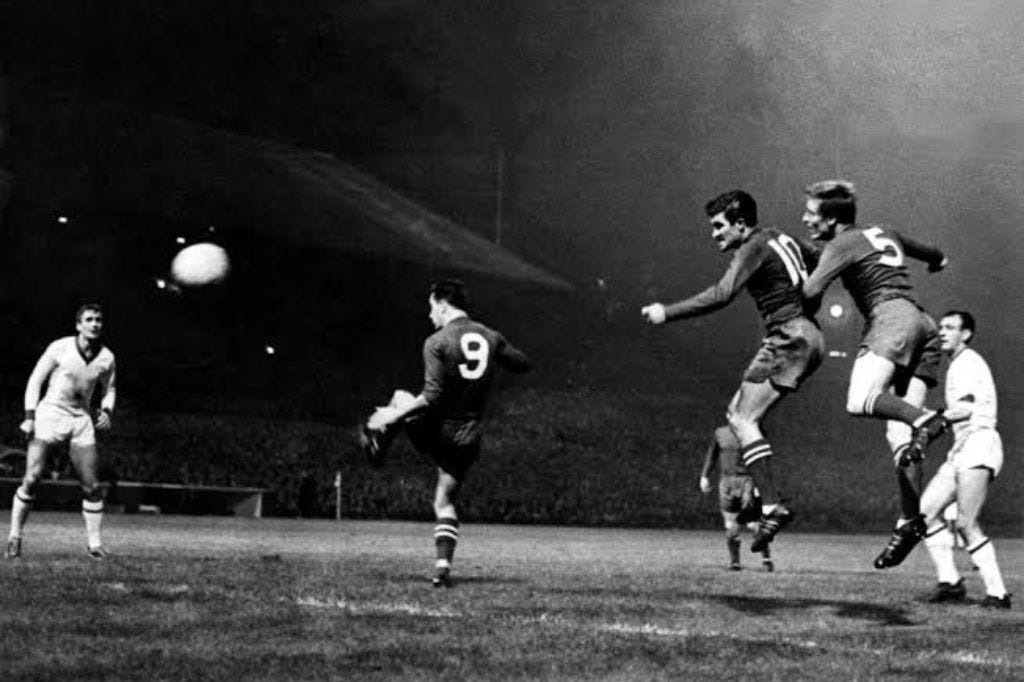
Three months after becoming the first British club to lift the European Cup in May 1967, Celtic’s defence of their crown was over before the autumn leaves had properly turned. In two tense, fractious nights against Dynamo Kyiv, the Lisbon Lions were brought down to earth, their invincibility exposed by a Soviet side that combined steel, discipline and a ruthless eye for the critical moment.
A 2–1 defeat at Celtic Park, followed by a 1–1 draw under a hostile sky in Ukraine, sent the holders out 3–2 on aggregate and turned one of Scottish football’s greatest triumphs into a sobering lesson in how quickly the mood can change at the top.
The summer of 1967 had been a blur of parades, receptions and endless replays of Tommy Gemmell’s equaliser and Stevie Chalmers’ winner in Lisbon. Celtic were not just champions of Scotland; they were kings of Europe, the team that had torn up the script on defensive football and done it with a team drawn entirely from within a 30‑mile radius of Glasgow.
By September, though, the confetti had been swept away and the grind of a new season had begun, with League Cup ties, league fixtures and European preparation all crammed into a few exhausting weeks.
Jock Stein told the press he wanted a 3–0 lead from the first leg at Celtic Park, a statement that read like confidence but also piled pressure on his side. Instead, what unfolded on 20 September 1967 was a chastening evening that still stings in Celtic folklore.
The Russians arrived in Glasgow on the Sunday, trained at Glasgow Green on Monday morning, and kept their cards close to their chests. Stein, by contrast, confirmed that the Lisbon Lions XI would start, the last time that exact eleven would begin a competitive match together.
From the first whistle, Celtic looked heavy and out of sync. In the fourth minute, a misplaced pass by Jimmy Johnstone in midfield was punished ruthlessly. A sweeping Kyiv move ended with Viktor Puzach slipping between Billy McNeill and John Clark to fire past Ronnie Simpson in goals.
Celtic Park, still buzzing from the summer’s triumph, fell quiet. And it got worse.
Just after the half‑hour mark, captain Billy McNeill failed to clear properly under pressure. Anatoliy Byshovets, widely judged the best player on the park, pounced to slot home and give Kyiv a 2–0 lead.
At the break, the mood in the stands was one of disbelief and anger. This was not the free‑flowing, confident Celtic of Lisbon; this was a team rattled, rushed and second best in key duels. Tommy Gemmell had also been lucky to stay on after a tangle with Valeriy Sabo, adding to the sense of a side losing its discipline as well as its rhythm.
Celtic came out with more intensity after the interval, pinning Kyiv back for long spells. In the 62nd minute, Bobby Lennox gave them a lifeline, volleying home from a Bertie Auld pass to make it 1–2.
From then on, it was almost all Celtic, Auld clipped the crossbar with a rising shot; Johnstone headed straight at the keeper from close range; Billy McNeill’s header was cleared off the line by Schegolkov; goalkeeper Yevhen Rudakov made what was described as “the save of the game” from another McNeill effort.
But the equaliser never came. When the final whistle went, Celtic Park was silent. For the first time, Celtic had lost a European tie at home.
Stein tried to steady the nerves afterwards. “It would be wrong to say that we are not concerned about this half time result but it is not the end of the world and we are not beaten yet,” he said. “We have never been in the position of going to a foreign country a goal down. Previously we have been able to pace ourselves. We cannot do that this time. We must attack from the start.”
The task was clear, go to Kiev and score. Anything less than a 1–0 win would mean elimination. In reality, Celtic would need to score at least twice without reply to feel comfortable.
Celtic flew to Ukraine on the Monday morning, a party of 18 players and officials, with Stein still not fully recovered from flu. They trained at the Central Stadium on Tuesday night and found the pitch uneven, a small detail that would later feed into the narrative of a difficult night.
Tickets were in huge demand, with reports of £1 tickets changing hands for £15 on the black market and protests outside the Ukrainian parliament over allocation. Around 85,000 packed into the stadium for a tie that felt like more than just football, European champions versus the pride of the Soviet game.
From the start, the match was stop‑start. Italian referee Antonio Sbardella was quick to blow for fouls, rarely allowing play to flow. Both sides struggled to build any sustained rhythm, but Celtic, knowing they had to chase the game, were the ones forced to take risks.
Kyiv’s plan was to stay compact, absorb pressure, and hit on the break. Two deep, organised lines sat in front of their goalkeeper, making it extremely hard for Celtic to carve out clear chances.
In the 59th minute, the tie tilted decisively against Celtic. Bobby Murdoch, frustrated after a foul was called against him, threw the ball to the ground. Sbardella showed him a second yellow and sent him off.
Suddenly, Celtic were down to ten men and still needed at least two goals to go through. The odds had just become much longer.
Two minutes after the red card, Celtic did what they did best and attacked. From a Bertie Auld free‑kick, the ball was chipped into the box and Bobby Lennox, once again, found the net from a narrow angle to make it 1–0 on the night and 2–2 on aggregate.
For a few minutes, belief surged. If Celtic could sneak one more, they could still turn this around.
Soon after, John Hughes appeared to do just that. The Kyiv goalkeeper dropped the ball at his feet, and Hughes tucked it into the net. Celtic Park, watching on TV and radio, erupted until Sbardella blew for a foul on the keeper.
Replays and reports at the time suggested the decision was harsh, with many in the Celtic camp convinced it was a legitimate goal. Had it stood, Celtic would have led 2–1 on the night and 3–2 on aggregate, effectively sealing their passage. Instead, it was chalked off, and the momentum swung back to Kyiv.
There was further drama when a Kyiv goal was also disallowed for handball, but by then the damage was done. Celtic were exhausted, down to ten men, and running out of time.
In the 90th minute, Kyiv caught a tiring Celtic on the break. Byshovets, the same player who had scored in Glasgow, finished to make it 1–1 on the night and 3–2 on aggregate.
When the final whistle went, there was no grand drama, just a grim acceptance. The European champions were out, and the man most blamed in the Celtic dressing room was not a player but the referee.
On paper, it was just a first‑round exit. In context, it was much more.
The first leg at Celtic Park was the last time the exact Lisbon Lions starting eleven played together in a competitive match. That they lost that night, and were eliminated over the two legs, gave the tie an added layer of symbolism. It was the end of an era.
Until that night, Celtic had not lost a European home tie. To fall 2–1 to Kyiv, after leading the continent just months earlier, was a jarring reminder that reputation meant nothing once the whistle blew.
The disallowed Hughes goal in Kiev became a classic “what if” moment. If it had stood, Celtic likely go through. Instead, it fed a sense that they had been denied a fair chance to defend their crown.
While they would go on to win the league and League Cup that season, the Kyiv tie underlined a pattern that would repeat in years to come, even to the present day, Celtic could rule Scotland, but Europe was a different beast, especially against well‑drilled European sides.
Manchester United would go all the way, beating Benfica 4–1 after extra time in the final at Wembley to become the first English club to lift the trophy.
Dynamo Kyiv, having knocked out the holders, were themselves eliminated in the next round by Poland’s Górnik Zabrze, who then lost to United in the quarter‑finals.
In that context, Celtic’s defeat looks less like a collapse and more like a reminder of how fine the margins were - one refereeing decision, one early goal, one off night, and the champions become history.