


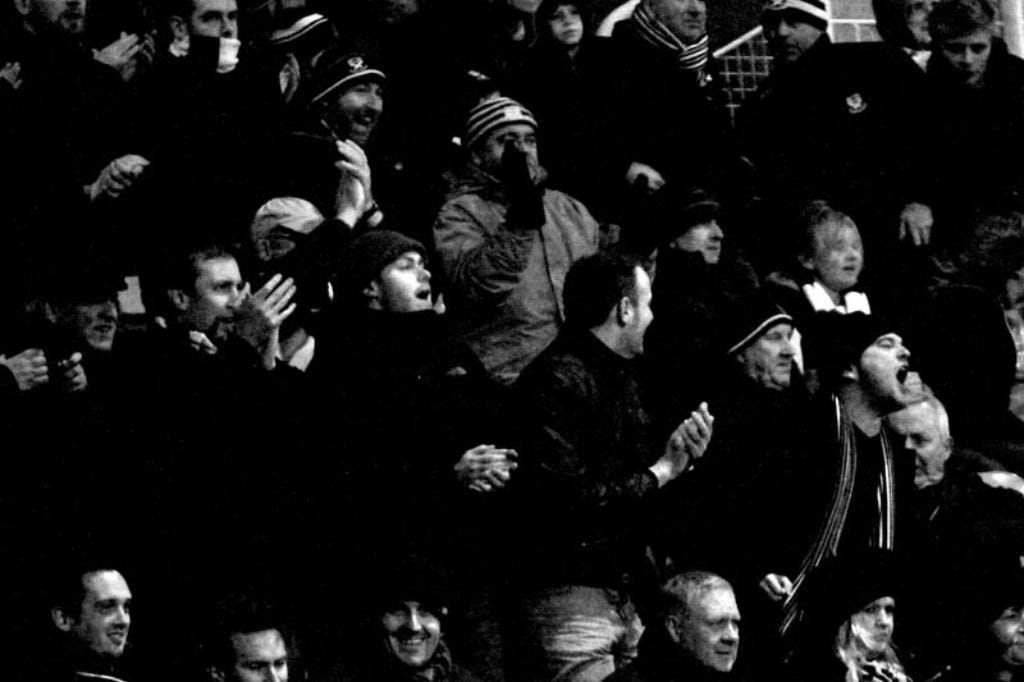
Scottish football is forever telling supporters that they are its lifeblood. Without them, the line goes, there is no game - no atmosphere, no television product, no sponsorship value, no meaningful identity for clubs that have been rooted in towns, schemes and communities for more than a century.
Yet the experience of many supporters tells a different story. The fan who pays hundreds or thousands of pounds a year to follow their club is too often handled not as a customer, citizen or stakeholder, but as a potential offender. They are searched, surveilled, corralled, lectured, filmed, policed and, in some cases, criminalised for behaviour that would attract little notice in most other public spaces or events.
This is not an argument that Scottish football has no problems. It does. Sectarianism is real. Racism is real. Misogyny, homophobia, violence and intimidation are real. Nobody should romanticise the ugliest parts of the game, nor pretend that every chant is harmless because it is shouted behind a goal instead of on the streets.
But there is a vital distinction that Scotland’s football authorities, governments and much of the wider establishment have repeatedly failed to grasp - tackling genuinely harmful conduct is not the same thing as treating football crowds as a uniquely suspect population.
For decades, the authorities have tended to view the football supporter through a narrow and pessimistic lens. The football fan is seen as a drink-fuelled menace; the away supporter as an invading force; the young man with a flag as a threat to public order; the organised group as a potential hooligan and criminal mob; the loud stand as a problem to be managed rather than a culture to be understood. Football is allowed to sell itself on passion, rivalry and tribal identity - right up to the point where supporters produce too much of it without permission from the institutions and authorities.
This piece examines how that attitude developed, how it has been expressed through alcohol restrictions, legislation, policing and stadium policy, and why the increasingly vibrant ultras culture has become such a revealing battleground.
The central question is simple - why does Scotland demand atmosphere from football supporters while so often treating the people who create it as if they are waiting to commit a crime?
The contradiction at the heart of Scottish football
Scottish football has a strange relationship with its own supporters. It needs them loudly, visibly and emotionally invested. It markets the very things that can make the matchday experience difficult to regulate - the noise, the colour, the local loyalties, the old grudges, the sense that a Saturday - or a midweek cup tie - matters beyond the 90 minutes.
A club’s social media team will post videos of flares of colour in the stands, flags unfurling, supporters bouncing in unison and scarves held aloft. Broadcasters use crowd noise as the soundtrack to their coverage. Sponsors want packed grounds because empty seats look like decline. Politicians praise football clubs as civic institutions when there is a charity initiative, a community programme or a triumphant parade.
But when fans organise independently, sing with an edge, travel in numbers, express political identities or question authority, the tone changes quickly. The same supporters who create the product become a policing issue. The noisy stand becomes a “safety concern”. A banner becomes an “incident”. The display becomes a logistical problem. The away allocation becomes a risk assessment.
That contradiction is not accidental. It comes from a long-established institutional preference for control over participation.
Football supporters are not passive consumers. They do not experience their club in the same way somebody experiences a cinema, a streaming service or a shopping centre. A football club is inherited, geographical and emotional. It is bound up with family, class, place and memory. People do not simply buy into it; they belong to it.
That makes football powerful. It also makes it awkward for institutions that would prefer neat, manageable consumers.
A supporter might resent the club board yet renew a season ticket every year. They may criticise the manager and travel across the country to watch the team. They may have political views that make executives uncomfortable, songs that make broadcasters nervous and an appetite for collective action that is uncommon in modern consumer culture. This is why fan culture is regularly treated as something to contain rather than cultivate.
The problem is not that football has rules. Every shared public environment needs rules. Grounds must be safe. People must be able to attend without fear of violence, discrimination or harassment. But rules gain legitimacy when they are proportionate, clear and applied fairly. They lose legitimacy when they appear designed to discipline a particular class of people, a particular culture or a particular form of expression.
Too often, football supporters in Scotland have encountered the second version. They are told that drinking is central to disorder even when they can legally drink heavily in nearby pubs before entering the ground. They are told that offensive language is unacceptable, while the boundaries of “offence” remain unstable and vulnerable to political pressure. They are told that pyrotechnics are always dangerous, even as clubs eagerly circulate photographs in which supporter-generated spectacle makes the stadium look alive. They are told to create an atmosphere, but only one that has been pre-approved, commercially acceptable and safely stripped of spontaneity.
The message is contradictory - be passionate, but not too passionate. Be tribal, but not too tribal. Be loud, but not offensive. Be colourful, but not disruptive. Be authentic, but only in a form that makes no one in authority uncomfortable. That is not a serious approach to football culture. It is a sanitised fantasy.
The football fan as a social type
There is a wider class and cultural dimension that should not be ignored. Football crowds have historically drawn heavily from working-class communities. That does not mean every supporter is working class, and it does not mean working-class culture is automatically virtuous. But it does mean that football is one of the few major public spaces where collective working-class identity remains highly visible.
The language is direct. The humour is rough. The emotion is public. The loyalties are deep. The rituals can be old-fashioned and sometimes imperfect. For sections of the political, media and professional class, that kind of public culture can be unsettling.
Much of elite public life now favours an individualised, corporate and carefully managed form of behaviour. Football crowds do not fit it. They are collective rather than individual. They are noisy rather than restrained. They are sentimental, confrontational and frequently resistant to being instructed how they ought to feel.
That does not make them beyond criticism. It does mean they deserve to be understood before they are condemned.
The tendency to treat supporters as an undifferentiated mass is one of the biggest failures in Scottish football policy. A group of 10,000 people is not one person. It includes children, pensioners, women, men, families, disabled supporters, lifelong regulars, occasional visitors, students, workers, people travelling from abroad and people attending their first match.
Yet enforcement measures often operate on the assumption that a crowd is a single potential threat. A restriction aimed at a minority can shape the experience of the majority. A policing operation designed around worst-case scenarios can make ordinary supporters feel as though they are under occupation. A vague law can leave thousands of people unsure whether an emotional, spontaneous football chant is a criminal offence. That is how alienation begins.
And alienation matters because football depends on consent. A stadium may be physically controlled through turnstiles, stewarding, CCTV and police powers. But a healthy football culture cannot be built through enforcement alone. It needs trust. Scottish football has spent too long eroding that trust.
The booze ban and the politics of control
The ban on the sale and consumption of alcohol at Scottish football grounds is one of the clearest examples of how a response to a specific historical crisis became a permanent symbol of distrust.
The restriction was introduced after the 1980 Scottish Cup final between Celtic and Rangers at Hampden, when a pitch invasion led to disorder and fighting. In the aftermath, football became an obvious target for political action. The spectacle of supporters fighting on the Hampden pitch was impossible to ignore, and the demand for a strong response was understandable.
But the policy that followed did more than address a moment of crisis. It helped create a lasting assumption that football crowds, unlike other large adult gatherings, could not be trusted around alcohol. That assumption has survived for decades.
At a rugby match, a concert, a race meeting, a festival or many other major sporting events, adults can typically buy alcohol within the venue. At Scottish football, meanwhile, the supporter is treated as a special case. They may drink before the game. They may drink after the game. They may drink in a city-centre pub, at a hospitality suite or at an event next door to the stadium. But inside the football ground itself, the state’s message remains clear - these people cannot be trusted.
The obvious weakness in the policy is that it does not remove alcohol from the matchday. It relocates it. Supporters often drink earlier, drink faster and drink in crowded pubs or on transport because there is no opportunity to have a controlled drink inside the stadium. The ban can encourage precisely the rushed pre-match consumption that its defenders claim to fear. It also turns entry to the stadium into an abrupt cut-off point rather than part of a more managed day.
A policy should be judged by what it achieves, not merely by how tough it sounds. If the objective is to reduce disorder, then it is legitimate to ask whether blanket prohibition inside stadiums is the most intelligent way to do that. If the objective is to reduce harmful drinking, then it is fair to ask why football supporters are singled out while alcohol remains a normal part of other public events.
The answer is not entirely about evidence. It is about symbolism.
Football is still seen by many decision-makers as an arena where ordinary standards of adult autonomy do not apply. The fan is not imagined as a customer who can be trusted with a beer; they are imagined as someone who will inevitably become a problem if given one. That is a deeply paternalistic view.
A ban that outlived its moment
The 1980 final was serious. Nobody should minimise it. But public policy requires more than permanent punishment for historical wrongdoing.
Scotland in the 2020s is not Scotland in 1980. Stadium design has changed radically. Crowd management has changed. Ticketing has changed. CCTV has changed. Communication has changed. Clubs have developed more sophisticated safety operations. Supporters themselves have changed, with increasingly diverse crowds and a far more family-oriented matchday in many grounds. Yet the alcohol ban has remained largely frozen in time.
That is not how policy normally works. Governments regularly review laws and regulations in light of changed circumstances. They assess risks, study evidence and consider whether blanket measures remain proportionate. In football, though, exceptional restrictions become culturally permanent because relaxing them is politically risky.
No minister wants to be blamed if something goes wrong after a change. No football authority wants the headline that says it “allowed booze back into grounds” if there is a disorderly incident weeks or months later. The safer institutional choice is to keep the old prohibition and insist that the question has already been settled.
But avoiding a difficult conversation is not the same thing as having a good policy.
A sensible debate would not require a free-for-all. Nobody is demanding a return to the worst habits of a different era. A modern system could involve tightly controlled sales, limited quantities, restrictions on particular fixtures, designated areas, pilot schemes, robust ejection policies and clear sanctions for misconduct.
In other words, football could be treated as capable of regulation rather than uniquely incapable of civilisation.
The refusal even to approach the issue with nuance reveals a broader problem. Scottish football policy is often built on blunt instruments because blunt instruments communicate authority. They allow politicians and administrators to say they have acted. What they do not always allow is room for judgement. And judgement is exactly what supporters feel has been removed from the game.
Hospitality hypocrisy
There is another uncomfortable element to the booze ban - money changes the rules. Football supporters in general admission areas are denied alcohol. Yet alcohol is available in hospitality settings at many grounds. Corporate guests can drink in lounges, boxes and function suites, often immediately before taking their seats. The same stadium that regards the ordinary supporter as a risk can regard a wealthier customer as a valued client.
This is not simply an issue of envy. It exposes the class logic behind the restriction. The concern is supposedly alcohol and football. But clearly that is not the case, because alcohol and football coexist perfectly well when consumed by people in more expensive seats. The distinction is not based solely on liquid in a glass. It is based on who is drinking, where they are sitting and how institutions perceive them. That perception matters.
The fan in the pub before the game may be viewed as a public-order concern. The guest in corporate hospitality is viewed as part of the business model. One is managed through suspicion; the other through service.
Scottish football should be embarrassed by that double standard. It sends the message that disorder is a problem of ordinary supporters rather than a question of individual conduct. It implies that respectability can be purchased. The reality, of course, is more complicated. People of every background can behave badly, and most supporters of every background behave perfectly responsibly. But blanket restrictions are attractive precisely because they avoid the harder work of distinguishing between individuals.
It is easier to ban everyone than to identify and punish actual misconduct. That may be administratively convenient. It is not necessarily fair.
The case for adulthood
The strongest case for reform is not that supporters have a moral right to drink at football. Nobody has an automatic right to buy beer in a stadium. The stronger argument is that adult football supporters deserve to be treated as adults unless there is a specific reason not to do so. The current system begins with mistrust. A better system would begin with responsibility.
It would recognise that football is an emotional environment, but not uniquely so. It would recognise that some fixtures carry greater risk, but not pretend every match is identical. It would recognise that alcohol can contribute to disorder, but not insist that prohibition in one location solves the wider problem. Most importantly, it would shift the focus from the crowd as a category to behaviour as a fact.
If someone assaults another supporter, abuses staff, damages property or creates danger, deal with them firmly. Ban them, prosecute them where appropriate and protect everyone else. But do not treat every person through the turnstile as a suspect because of what a minority did 46 years ago.
The difference is not cosmetic. It is a choice between collective punishment and individual accountability. Scottish football has too often chosen the former.
The Offensive Behaviour Act and the danger of vague criminalisation
If the booze ban represents a long-running culture of institutional mistrust, the Offensive Behaviour at Football and Threatening Communications (Scotland) Act represented something more direct, an attempt to criminalise a broad and poorly defined category of football-related expression.
Introduced in 2012, the Act was presented as a response to sectarianism, hatred and threatening behaviour. Those aims were legitimate. Scotland had, and still has, serious problems with sectarian bigotry and with language that can intimidate, dehumanise or threaten.
But a law is not judged only by its stated purpose. It is judged by its wording, enforcement and consequences.
The Offensive Behaviour Act quickly became controversial because it appeared to give the police and prosecutors wide discretion to decide what football-related conduct crossed the line into criminality. That is particularly dangerous in a setting where songs, chants, banners, gestures and historical references are often emotionally charged, politically contested and capable of different interpretations.
The law’s defenders tended to ask - what is the objection to banning offensive behaviour? The answer was that “offensive” is not a stable legal category.
Something can be offensive without being threatening. It can be distasteful without being criminal. It can be provocative, crude, partisan, historically ignorant or deeply unpleasant without meeting the threshold that should be required for the state to intervene with criminal law.
That distinction matters because criminal law is not a school disciplinary code. It carries the power of arrest, prosecution, a criminal record, fines, employment consequences and stigma. It should be clear enough that people can reasonably understand what is prohibited before they act. The Act struggled to meet that standard.
The danger of giving offence
A free society should not be indifferent to offence. People can be harmed by speech. Targeted abuse can create fear. Hate speech can contribute to wider discrimination and violence. Football grounds are not exempt from those realities simply because people call the language “banter”. But the answer cannot be to make subjective offence the operative standard.
If the key test is whether someone is offended, then enforcement becomes unstable. Different supporters, police officers, prosecutors, politicians and journalists will draw the line in different places. One song may be treated as cultural by one group and offensive by another. One banner may be seen as political speech by one observer and as an incitement to hatred by another.
The law has to do more than register emotional reaction. It has to identify conduct that is sufficiently serious to justify criminal sanction.
The failure to make that distinction clearly produced a damaging atmosphere around football. Supporters could feel that they were one chant, one lyric or one phrase away from legal jeopardy. The line between unacceptable conduct and criminal conduct was blurred.
When people believe that rules are vague or selectively enforced, they do not necessarily become more respectful. They become more distrustful. They may see enforcement not as a fair attempt to stop harm but as evidence that authorities are hostile to their identity, club or political tradition. That does not excuse abusive behaviour. It explains why law without legitimacy often fails to build the social consent it needs.
A law built around football exceptionalism
The Act also reinforced the idea that football requires its own special legal framework because football supporters are uniquely dangerous. That is a significant claim. It says, in effect, that conduct associated with football should be treated differently from comparable conduct elsewhere. It places the supporter in a separate category of person.
There are circumstances where football-specific measures may be justified. Matchdays can create predictable public-order pressures. Rival crowds can converge in particular locations. Travel routes, kick-off times and policing plans can all create practical challenges.
But football-specific law should be approached with caution precisely because it can normalise exceptional treatment. The more readily the state creates special offences, special powers and special restrictions around football, the more it encourages the view that supporters sit outside ordinary civic assumptions. The fan becomes not merely a citizen who attends a match, but a football person - a type requiring separate management.
That distinction can spread quickly. Once football is framed primarily as a public-order problem, every part of fan culture can be viewed through that lens. Songs become evidence. Flags become signals. gatherings become risks. Organised supporter groups become objects of suspicion. Social media posts become potential material for investigation. The result is a climate in which authorities become more alert to the possibility of disorder than to the value of culture.
That is how football gets flattened. The complexities of support, the humour, theatre, grief, loyalty, creativity and shared memory are reduced to a security file.
Repeal was not surrender
The Act was repealed in 2018 after sustained criticism from civil-liberties groups, supporters, legal figures and opposition politicians. Its repeal mattered because it recognised a basic democratic principle - laws must be clear, necessary and proportionate.
Repeal did not mean sectarianism was acceptable. It did not mean threats, harassment or hatred should be ignored. It meant those issues should be addressed through laws that are properly defined and consistently applied, rather than through a football-specific framework broad enough to capture uncertain and contested expression.
A mature society can hold two thoughts at once. It can say that sectarian and discriminatory conduct must be confronted. It can also say that criminal law should not be vague, politically performative or built on the assumption that football supporters deserve fewer protections than everyone else. The failure to hold both ideas together is one of the recurring weaknesses in Scottish football debate.
Too often, critics of overreach are portrayed as defenders of bigotry. Too often, people who want stronger action against genuine hate are portrayed as enemies of supporter culture. Neither caricature helps. The real challenge is to draw a line that is morally serious and legally credible.
Threats should be punished. Targeted harassment should be punished. Racist abuse should be punished. Homophobic abuse should be punished. Conduct that incites violence or creates a real risk of public disorder should be punished.
But not every offensive chant is a criminal act. Not every political expression is sectarianism. Not every uncomfortable display is a threat. And not every football supporter should have to navigate a stadium environment as if the law is waiting to catch them out.
The lesson of the Offensive Behaviour Act should be that legislation cannot substitute for understanding. It cannot solve cultural problems merely by expanding police discretion. If authorities want to change behaviour, they need legitimacy, dialogue, consistency and a willingness to distinguish between the difficult and the dangerous.
Ultras, flags and the fear of independent fan culture
Few developments expose Scottish football’s anxiety about supporters more clearly than the rise of the ultras scene.
Across the country, organised groups have brought colour, choreography, flags, banners, songs and a renewed sense of collective identity to stadiums that too often risk becoming flat, passive spaces. Their influence has been especially visible among younger supporters, many of whom have rejected the idea that football should be experienced sitting silently while a PA system supplies the atmosphere.
The ultras movement is not uniquely Scottish, and it is not politically simple. In different countries and clubs, it has taken many forms. Some groups are overtly political. Some are community focused. Some are intensely territorial. Some have been associated with disorder. Some are creative, charitable and deeply committed to supporting their teams.
But in Scotland, authorities have often responded to ultras culture as though it is inherently suspicious and criminal. The presence of flags, coordinated displays and organised young supporters can trigger a security-minded reaction before any specific wrongdoing has taken place. Why?
Partly because independent organisation unsettles institutions. A fan group that can mobilise hundreds or thousands of people is not fully under club control. It may challenge boards, protest ticket prices, oppose stadium decisions, criticise policing and articulate views that do not fit the club’s commercial messaging. It can create its own media, its own visual identity and its own sense of legitimacy. To an insecure boardroom, that can look like a threat.
Yet independent supporter organisation is often one of the healthiest signs in a football culture. It shows that people care enough to contribute more than money. They give time, labour, creativity and emotional energy. They make flags, design displays, arrange collections, travel in numbers and create rituals that turn a fixture into an event.
The correct response from clubs should not be automatic suspicion. It should be structured engagement.
Atmosphere cannot be outsourced
Modern football has a recurring problem of institutions wanting an atmosphere but dislike the people who make it.
Clubs will advertise a “special European night” or call on fans to “make some noise”. They will release promotional videos built around chanting supporters. They will sell merchandise featuring terrace culture and historic imagery. But when the fans who generate that culture want to stand together, display banners or coordinate their support, they can find themselves facing restrictions, bureaucracy and hostility. The atmosphere is treated as a product rather than a relationship.
You cannot manufacture authentic noise by asking people to clap on cue. You cannot replace fan culture with a pre-match playlist. You cannot create belonging through a marketing campaign if the people in the stands feel constantly monitored and mistrusted.
The strongest grounds in Scottish football are not necessarily the biggest or richest. They are the ones where supporters feel some ownership of the experience. Where singing sections are encouraged rather than dispersed. Where flags are welcomed within sensible safety rules. Where clubs communicate early and honestly about displays. Where stewarding is based on problem-solving rather than confrontation.
A supporter who feels respected is more likely to cooperate. A group with a direct relationship to club safety staff is more likely to plan responsibly. A clear, proportionate process for displays is more likely to prevent last-minute conflict than a blanket ban issued from above.
By contrast, treating every organised fan initiative as a possible disorder issue can become self-fulfilling. It creates resentment, pushes communication into informal channels and turns manageable disagreements into symbolic battles.
Pyrotechnics - a problem made harder by refusal to engage
Flares and pyrotechnics are one of the most contentious elements of the ultras debate. They are visually powerful and can create spectacular scenes. They can also be dangerous, especially in dense crowds or enclosed spaces. Smoke can affect people with respiratory conditions. Devices can burn, panic can spread and unregulated use creates obvious risks. It is right that safety concerns are taken seriously.
But the debate often stops there, as though identifying danger ends the policy question. It does not. The reality is that pyrotechnics remain part of football culture across Europe and, increasingly, in Britain. Blanket prohibition has not made them disappear. It has often driven their use into less controlled conditions, where devices are smuggled in, ignited without coordination and handled without safety planning.
A more intelligent approach would begin by accepting two facts at once - uncontrolled pyrotechnics can be dangerous, and the desire for visual spectacle is not going away.
That does not automatically mean legalising every flare or allowing fans to do whatever they want. It means considering whether tightly managed, licensed, professionally supervised displays could reduce harm more effectively than an approach based entirely on prohibition and punishment.
There are models elsewhere that involve trained operators, designated zones, safety equipment, approval processes and coordination with clubs and emergency services. Scotland should be capable of discussing such options honestly. Instead, too much of the conversation remains trapped between two lazy positions. One side insists that every flare is harmless because it looks good. The other treats every visual display as proof that the supporters involved are reckless or criminal. Neither position is adequate.
The smarter route is harm reduction - identify the risk, create safer alternatives, punish genuinely dangerous behaviour and stop pretending that a purely punitive model has settled the matter.
Banners and political discomfort
Flags and banners raise a different set of issues. Some displays are celebratory. Some commemorate players, supporters or historic events. Some are humorous or provocative. Some are political. Some are plainly unacceptable.
The difficult question is not whether clubs should permit every banner. They should not. Racist messages, threats, targeted abuse and material likely to provoke violence should be prohibited. Clubs have duties to protect people in their grounds. The question is whether the rules are transparent and applied consistently.
Too often, banner policy can feel arbitrary. A message that flatters the club or fits a conventional civic narrative may be welcomed. A message that challenges power -whether football power, police power, political power or ownership - may be treated as an embarrassment. The result is a suspicion that “safety” is sometimes used as a catch-all justification for suppressing inconvenient speech.
Football has always been political because communities are political. Clubs emerged from workplaces, churches, neighbourhoods, migration and local identity. Supporters carry those histories into the ground. Trying to make football entirely apolitical is not neutral; it usually means allowing only the politics that already feel comfortable to the people in charge. That is not a case for unlimited expression. It is a case for honesty.
If a club bans a banner because it contains a threat, say that. If it breaches a clear rule on discrimination, say that. If it creates a genuine safety issue, explain it. But do not hide broad political discomfort behind vague language about reputational risk. Supporters are not fools. They can tell the difference between a clear safety standard and institutional nervousness.
What respect for supporters would actually look like
The case against criminalising football fans is not a case for lawlessness. It is a case for better law, better policing and better football governance. Supporters do not need to be treated as saints. They need to be treated as people.
That means recognising that the overwhelming majority of people attending Scottish football matches want to support their team, enjoy the day and go home safely. It means dealing firmly with serious misconduct without using a minority as an excuse to impose suspicion on everyone else. It means replacing the reflex to control with a willingness to engage.
Scotland does not need to choose between safe football and lively football. It can have both. But it will require a change in attitude.
Move from collective punishment to individual accountability
The foundational principle should be simple - punish actions, not identities. If someone commits violence, racist abuse, harassment or serious disorder, the response should be clear and robust. Football banning orders, criminal prosecution, club sanctions and exclusion from grounds can all be appropriate where evidence supports them. But the target should be the person responsible, not sections of the support or the entire support.
That sounds obvious, but many existing practices do the opposite. Blanket restrictions on flags, seating areas, alcohol, travel arrangements or supporter movement often affect thousands because authorities are unwilling or unable to distinguish between people.
A more confident system would invest in identifying actual offenders. It would gather evidence properly, use sanctions proportionately and avoid penalising ordinary supporters for conduct they did not commit.
Make rules clear and public
Supporters should know the rules before they arrive at the ground. Clubs need transparent policies on banners, flags, tifos, standing areas, entry procedures, searches and supporter displays. Those policies should explain what is prohibited and why. They should include appeal or review mechanisms where possible. They should not rely on vague phrases that allow almost any decision to be justified after the fact. Clarity protects everyone.
It protects supporters from arbitrary enforcement. It protects stewards from being asked to enforce rules they cannot explain. It protects clubs from accusations of inconsistency. And it protects safety operations by ensuring that groups planning displays know the boundaries in advance.
The same principle should guide policing. Officers should be trained to distinguish between robust football culture and conduct that actually creates risk. Not every loud chant requires intervention. Not every group gathering near a ground is a disorder threat. Not every supporter using bad language is about to commit a hate crime. The more precisely authorities define the problem, the more proportionate their response can be.
Treat fan groups as partners
Every professional club should have meaningful, regular engagement with supporter groups, including organised singing sections and ultras where they exist. Not token consultation. Not a once-a-year meeting where decisions have already been made. Genuine dialogue.
That means identifying named club contacts, involving fan groups early in plans for displays or major fixtures, discussing safety concerns honestly and creating practical routes for resolving disputes. It means understanding that supporters often possess expertise that clubs lack: knowledge of the fanbase, travel patterns, traditions, songs, relationships between groups and the emotional temperature around particular matches.
A good supporter liaison structure can prevent problems before they occur. It can also improve the matchday product. Fans who feel trusted are more likely to invest in atmosphere. Clubs that work with them can create displays that are safe, visually powerful and meaningful. This is not merely a cultural benefit; it has commercial value. A lively ground improves television coverage, strengthens club identity and can make attending matches more attractive to new supporters. The idea that fans and authorities must be opposing sides is self-defeating. They have overlapping interests.
Both want full grounds. Both want people to be safe. Both want a strong atmosphere. Both want the club’s reputation to grow. The conflict arises when supporters are treated as a problem before they are treated as participants.
Build a culture of proportional policing
The police presence around football can be necessary. Certain fixtures require planning. Public safety matters. But there is a profound difference between visible, professional policing and an operation that makes ordinary supporters feel criminalised.
The best policing is often the least theatrical. It is informed, calm, proportionate and responsive to actual behaviour. It avoids escalating minor issues. It communicates clearly. It does not confuse authority with aggression.
Football policing should be judged not only by whether serious disorder is prevented, but by whether supporters are treated fairly in the process.
Were people stopped or searched on a clear basis? Were routes and restrictions explained? Were fans given reasonable information? Were families and vulnerable supporters considered? Was force used only when necessary? Were decisions open to scrutiny?
These are not soft questions. They are the questions that determine whether public authority is trusted.
The wider lesson is that legitimacy is a form of safety. If supporters believe rules are fair, they are more likely to comply. If they believe they are being singled out, humiliated or collectively blamed, resentment grows. That resentment may not always lead to disorder, but it damages the relationship on which safe matchdays depend.
Let football be football
Ultimately, Scottish football needs to decide what it wants to be. Does it want sanitised venues where supporters are invited to consume a product quietly and leave? Or does it want living institutions where people sing, argue, laugh, mourn, celebrate, protest and create a collective experience that cannot be replicated by a screen?
The second option is messier. It requires patience. It requires tolerance for emotion and disagreement. It requires confidence that supporters can be partners rather than subjects. But it is also the only option that preserves what makes football matter.
Nobody goes to a match solely because the seating is orderly or the signage is clear. They go because of feeling. Because of history. Because a goal can make strangers embrace. Because a song can carry a memory. Because a stand full of people can still produce a sense of belonging that much of modern life struggles to offer. That is not a public-order problem. It is a public good.
Of course it needs boundaries. Of course it needs rules. Of course people must be protected from violence, hatred and intimidation. But boundaries should preserve the game’s humanity, not drain it away.
For too long, Scottish football has approached supporters as if passion itself is the danger. The result has been a culture of bans, suspicion and performative toughness that often misses the real issues while making ordinary fans feel unwelcome in their own game. The better approach is harder but more durable - trust supporters where possible, engage them always, punish genuine wrongdoing precisely and stop treating football fandom as a lesser form of citizenship.
Scottish football does not need fewer fans with fewer voices. It needs institutions mature enough to hear them.