


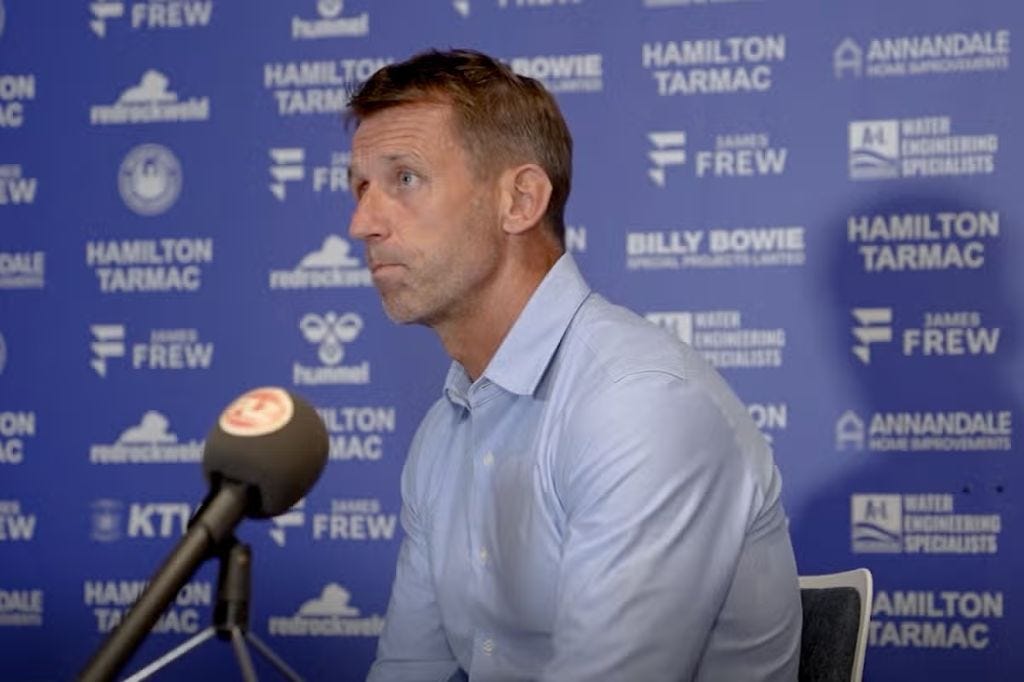
The first thing you notice about Neil McCann’s Kilmarnock this season is how quickly the optimism of last spring has curdled. A side that finished with a flourish, suddenly bright and dangerous in the final third, now sits rooted to the foot of the Scottish Premiership, winless in five league games and freshly eliminated from the League Cup on penalties. The numbers tell their own story - three of their nine goals in all competitions arrived in a single cup tie against Ayr United, while they have failed to score in half of their 10 matches this term. At the other end, 14 goals conceded in those opening five league fixtures before the Aberdeen stalemate suggests something more systemic than a run of bad luck.
There is an obvious temptation to reach for the neat narrative, and at Rugby Park it practically writes itself. Over the summer the much-maligned astro turf came up, grass went down, and the results duly fell off a cliff. Whether the surface is a genuine tactical factor or simply a convenient symbol, it has become shorthand for a club that set out to do things properly and instead lost the very things that made them competitive. The team that looked inventive on the old plastic now appears blunt and leaky on the new pasture, and every goalless display reinforces the sense that the “new way” is not working.
McCann’s arrival last season transformed Kilmarnock’s trajectory. By the end of the campaign they were playing with a freedom and purpose that had been missing for years, and the expectation was that this would carry into a top‑half challenge. Instead, the identity has evaporated. Chances are scarce, transitions are messy, and the defensive shape that once offered a platform now looks porous and uncertain. When a team’s character flips so dramatically in one off‑season, the manager inevitably becomes the focal point for blame, fairly or not.
The language from inside the club still leans on hope. McCann spoke before the Aberdeen cup tie of using the quarter‑final as a “catalyst”, pointing to the Ayr victory and the clean sheet at Pittodrie as signs of life. But the cup run is over, the league position remains bottom, and the underlying performances still lack clarity and threat. In the Scottish game, that combination rarely buys much patience. Livingston’s decision to dismiss Glenn Whelan after nine games underlines how low the tolerance level currently is for managers whose teams start seasons this poorly.
Kilmarnock’s board will know there is still time to recover in the league, but they will also be aware that confidence and momentum are already slipping. Fan frustration is edging into the open, with supporters describing performances that lack “imagination and inspiration”. A change now still allows a successor to work with a squad that, on paper, should be comfortably mid‑table, and the risk of waiting too long in a division so quick to move on managers is well understood.
None of this means McCann’s departure is inevitable. A strong run over the next month, particularly against direct rivals, could reframe the narrative as teething problems on the new pitch rather than a manager out of his depth. Yet the margin for error is tiny. Every additional goalless display, every soft goal conceded, and every sense that the team does not know what it is supposed to be will push the conversation from “give him time” to “cut losses early”.
On the evidence so far, the uncomfortable truth is that Kilmarnock’s form has tanked at precisely the moment they were expected to build, the attacking spark from last season has gone missing, and the defensive frailties are too consistent to be dismissed as bad luck. Whether the grass is a genuine cause, it has become part of a wider story that McCann no longer has the answers. Unless there is a rapid and visible upturn in performances and results, the most likely outcome is that Kilmarnock decide the risk of sticking with their manager outweighs the disruption of changing early, and that his time at Rugby Park ends sooner rather than later.